

CRM
7 min read
What is a personal CRM
A personal CRM fundamentally works different compared to the classic B2B sales and marketing CRMs.



tl;dr
A new paradigm shift in the CRM space finally makes a personal CRM easy and seamless to use.
Before we dive deep into why it needs AI to finally make a personal CRM work, we take a step back and take a look at what exactly is a personal CRM and how it differentiates from a traditional customer relationship management (CRM) tool. There are some reasons we will discover why there is no popular solution in the market yet and how AI plays into role change that.
So when we talk about a personal CRM what exactly do we mean by it? If you want to read a in depth article about it you can check out our dedicated personal CRM post.
To summarise it in a short way, you can think about a personal CRM more like your advanced contact book. It is your central place where you keep track of your entire network and all connections that you made in your private and professional life. The biggest difference in regards to a “normal” CRM is that a personal CRM is not necessarily treating your contacts in a transactional way. The traditional CRM is made to push people or often called “leads” through some steps in a funnel to ultimately convert a few of them into customers of your product or service.
When it comes to managing your personal network you don't want to treat everyone that you met in a transactional way and think about how you can extract value out of this person. Technically you could use these CRM's also for your personal use-case but the downside is that they tend to be more expensive as they are bought by companies. Also if you use the CRM of your company to manage your own network – what happens when you leave the company? You won't take your account with you as it is property of the company. So it need a standalone solution that is tailored for your private use-case – a personal CRM.
The idea of having a personal CRM is nothing new. It just make sense that you have a central place where you store all your contacts and information from people that you meet. Especially if your meet hundreds sometimes even thousands of people during your life it is almost impossible to keep track of everyone without the help of software tools.
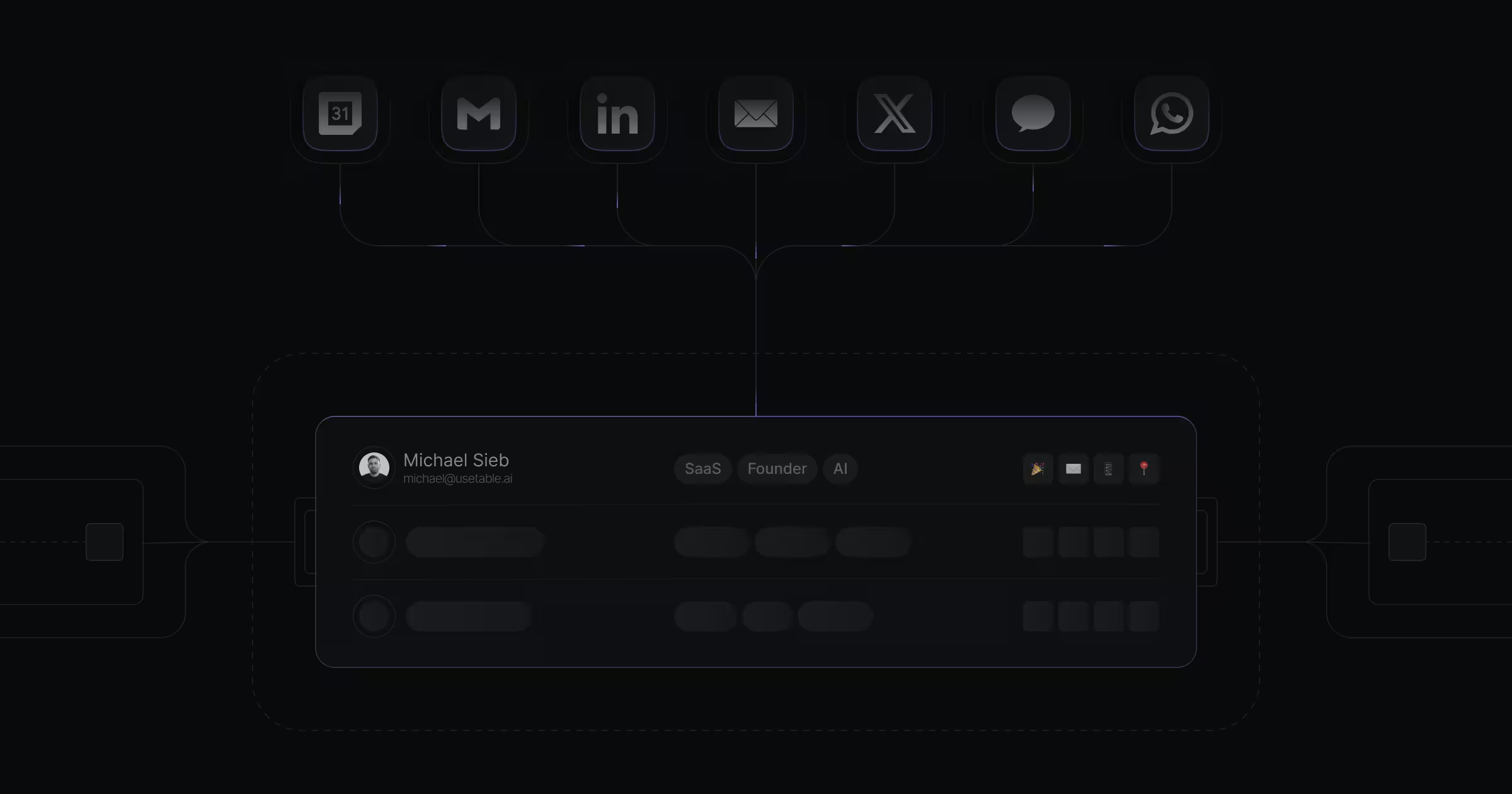
An app like your contact app on your phone can't fulfil the requirements and is very limited in its functions. Just think about how many people have you met through email conversation, are connected on LinkedIn or other social platforms, or had zoom meetings with and you have not entered them into your contact app. It would a hassle to do so and manual enter all the information from your daily interactions with people. A personal CRM on the other hand is connected and deeply integrated to the platforms and places where you have touch points with your network.
So why is there not a market leader in the personal CRM space? In theory this all sounds plausible and make sense. But the reality looks different. Existing solution still require a lot of manual work to get information in and out of the system. It is really hard to adopt a tool in your day to day life where you constantly need to keep in mind to bring in new information from a email conversation, a video call, or the chat from your messengers. And at the same time is it difficult to search and retrieve data if it is more than just someone's email or phone number. Semantic search is not trivial. But speaking of semantic search this is a perfect segway to tackle our initially question.
Why does it need AI to finally make a personal CRM work? The short answer would be –– because it eliminates all the weaknesses of current solutions and automates the process to take the work off your hands. But you are certainly here to learn in depth why this is.
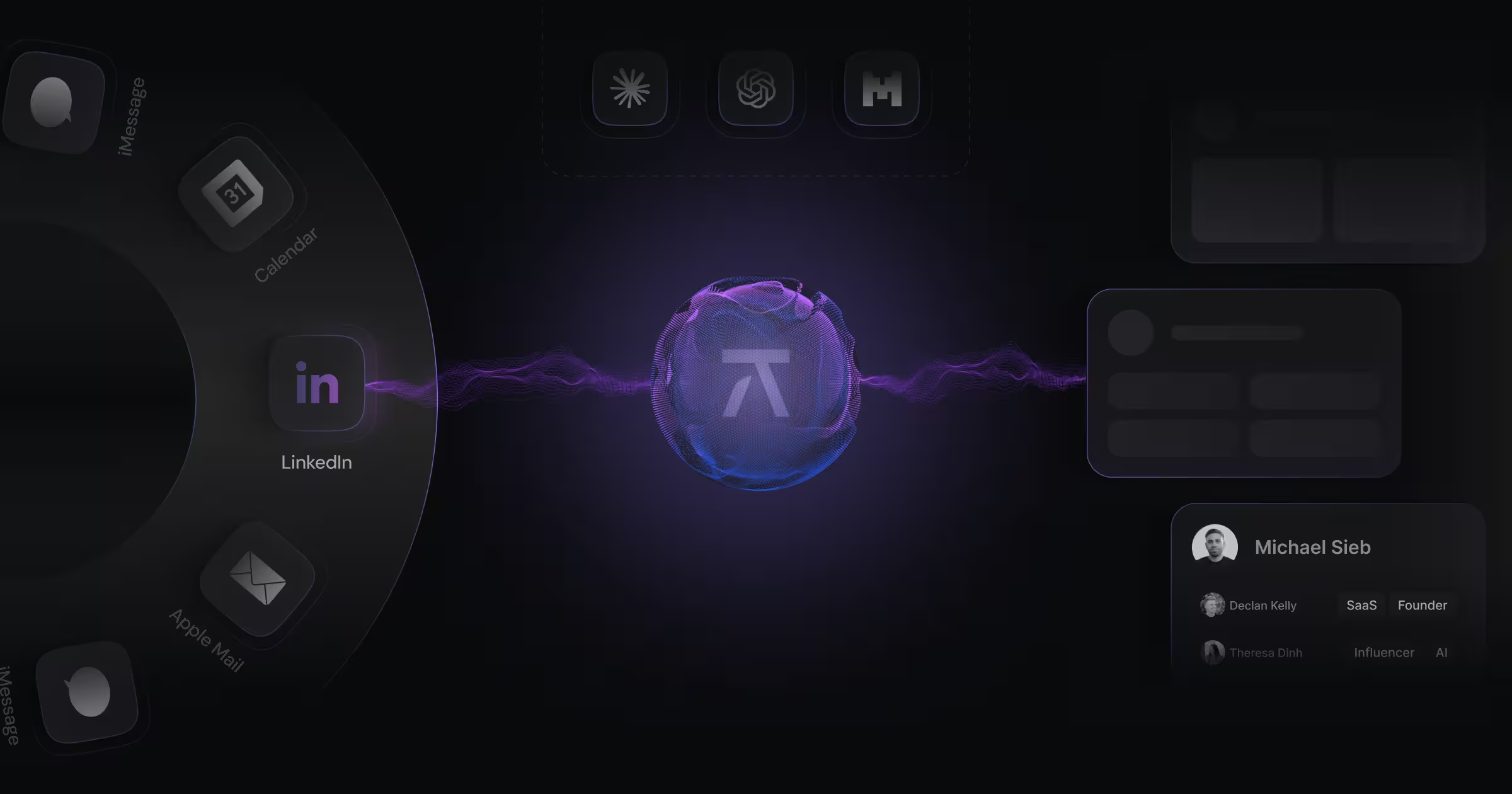
AI is here, and its impact on how we manage relationships will be profound. Picture a world where your relationship memory isn't just a static record, but an active source of context. It understands the people in your network, knows what matters, and helps you follow through.
More than just the center of your tech stack, your CRM is constantly at work in the background, processing both structured and unstructured data from every interaction. Every email, call, meeting, and in person conversations are organised and surfaced in a way that intuitively is searchable.
Let's bring up some examples to better grasp the potential:
In the AI era, CRM's will be data-driven, autonomous engines, handling the heavy lifting for you so it becomes super easy to stay on top of your network.
At table, we are rethinking how technology can help us care for our relationships. table builds AI memory from the tools you already use, then helps you find context, remember what matters, and follow through. We created it because managing a growing network still takes too much manual work. Our goal is not another database to maintain, but thoughtful software that helps you build stronger relationships across your personal and professional life.
Another core belief of ours is that you can't really bolt new AI onto legacy CRM systems. CRM's has become a rigid, incomplete set of data. It was built to store information on business cards and proposals, not generate productivity, insights, and alignment from massive amounts of unstructured conversation data. Anyone who's had to create custom CRM fields to accommodate meeting notes, or wrestle with properties to be able to get contact summaries, or manual set tags to every contact, knows what we're talking about. To handle your network, you need to re-think the way you gather, analyse, and share information, and that's exactly what we're setting out to do.
If that sounds interesting to you and you wanna give it a shot, sign up here.

